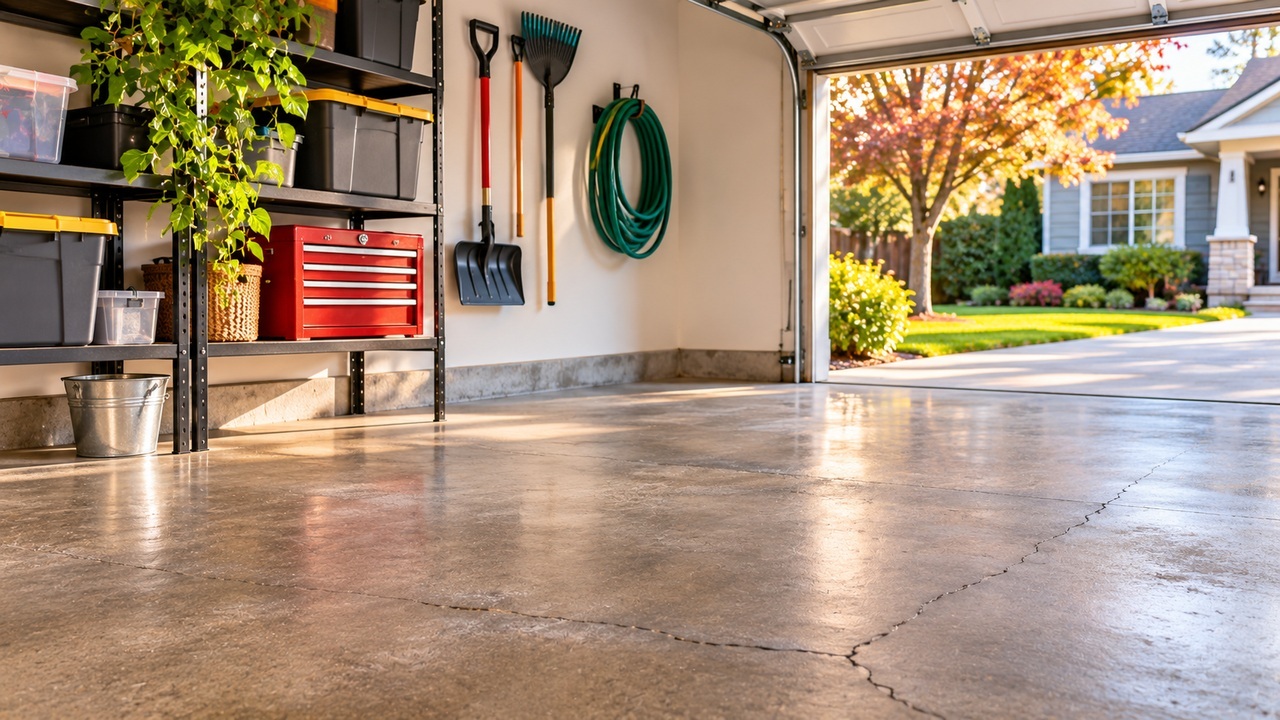
 A garage is often treated as a bonus space for parking, storage, or projects. Buyers may glance at its size and move on, overlooking the concrete floor beneath their feet. Yet stains, cracks, slopes, and signs of moisture can offer useful clues about how the space has been used and whether further investigation is warranted.
Not All Cracks Mean the Same Thing
Small surface cracks can develop as concrete cures or responds to temperature changes. Other cracks may deserve closer attention, especially when sections of the slab appear uneven, separated, or significantly displaced. A buyer cannot determine the cause simply by looking, but unusual movement is worth mentioning to a home inspector.
Be cautious about assuming that every crack is structural or that every patched area is harmless. Context matters, including the age of the home, drainage conditions, and whether the damage appears to be changing.
Stains Can Raise Useful Questions
Oil spots and tire marks are common in garages. Dark discoloration, persistent dampness, or unusual odors may call for additional questions. A stain might reflect an old vehicle leak, a cleaning product, or moisture entering from outside. Visual evidence alone rarely identifies the source.
Look along the walls and where the floor meets the foundation. Water marks or damaged stored items may suggest that rainwater has entered the garage. If the seller has recently painted the floor, ask whether the coating was cosmetic or part of a repair.
Pay Attention to Slope and Drainage
Garage floors are often designed with a slope to manage water, but the exact requirements depend on the property and local building standards. Notice whether water would appear to move toward the garage door or collect in a low area. Do not pour water or perform tests during a showing without permission.
If you see evidence of repeated pooling, ask your inspector whether further evaluation is appropriate. Drainage problems can affect stored belongings and create ongoing maintenance headaches.
Consider How You Will Use the Space
A garage intended for parking has different demands than one used for a workshop or home gym. Uneven flooring, limited outlets, or poor drainage may affect future plans. Before budgeting for improvements, check local rules and obtain estimates from qualified professionals.
A garage floor does not need to look brand new to be functional. The important step is noticing conditions that could affect safety, convenience, or repair costs. Looking down for a few moments during a tour can help buyers understand the property more completely.